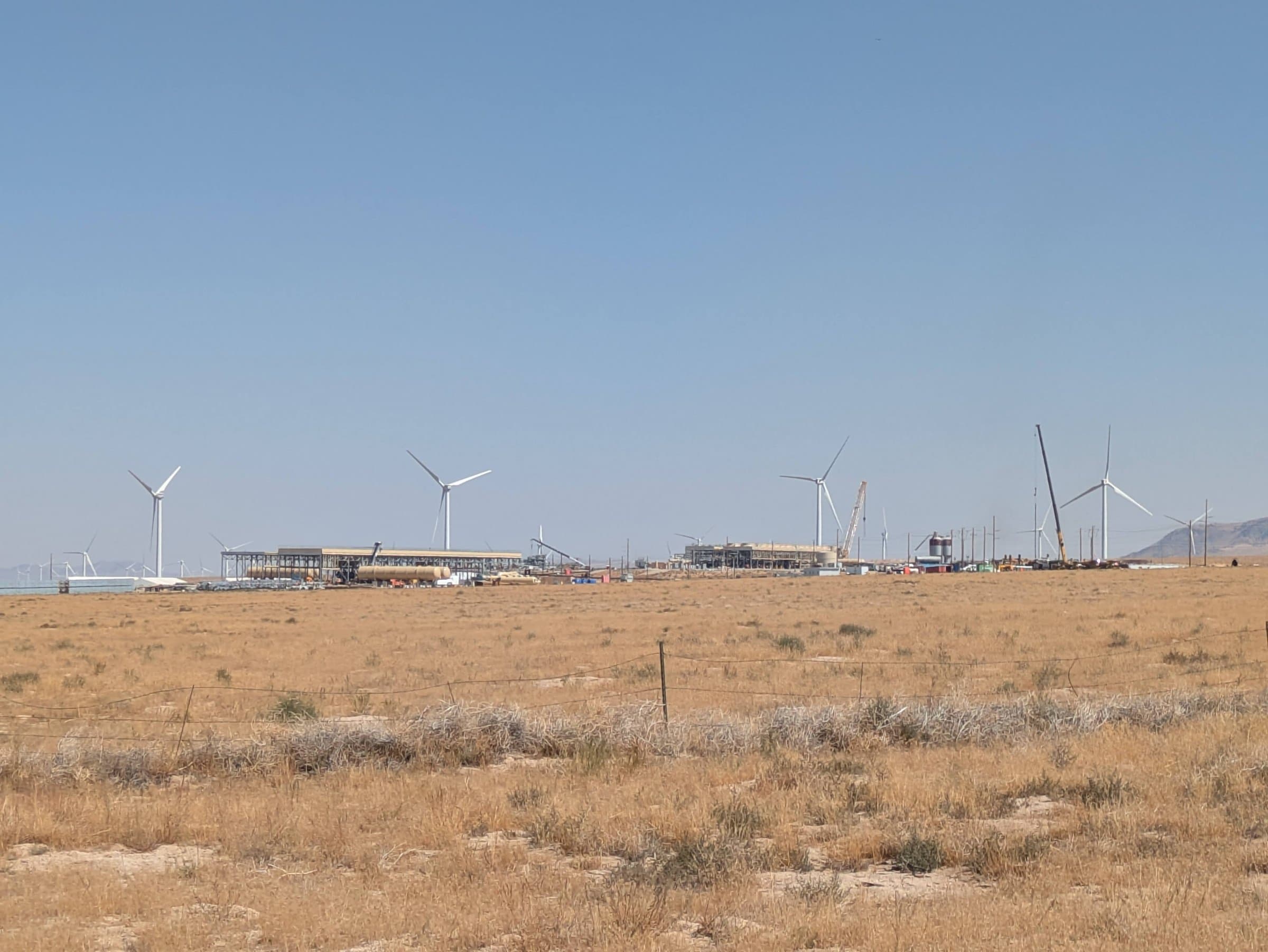
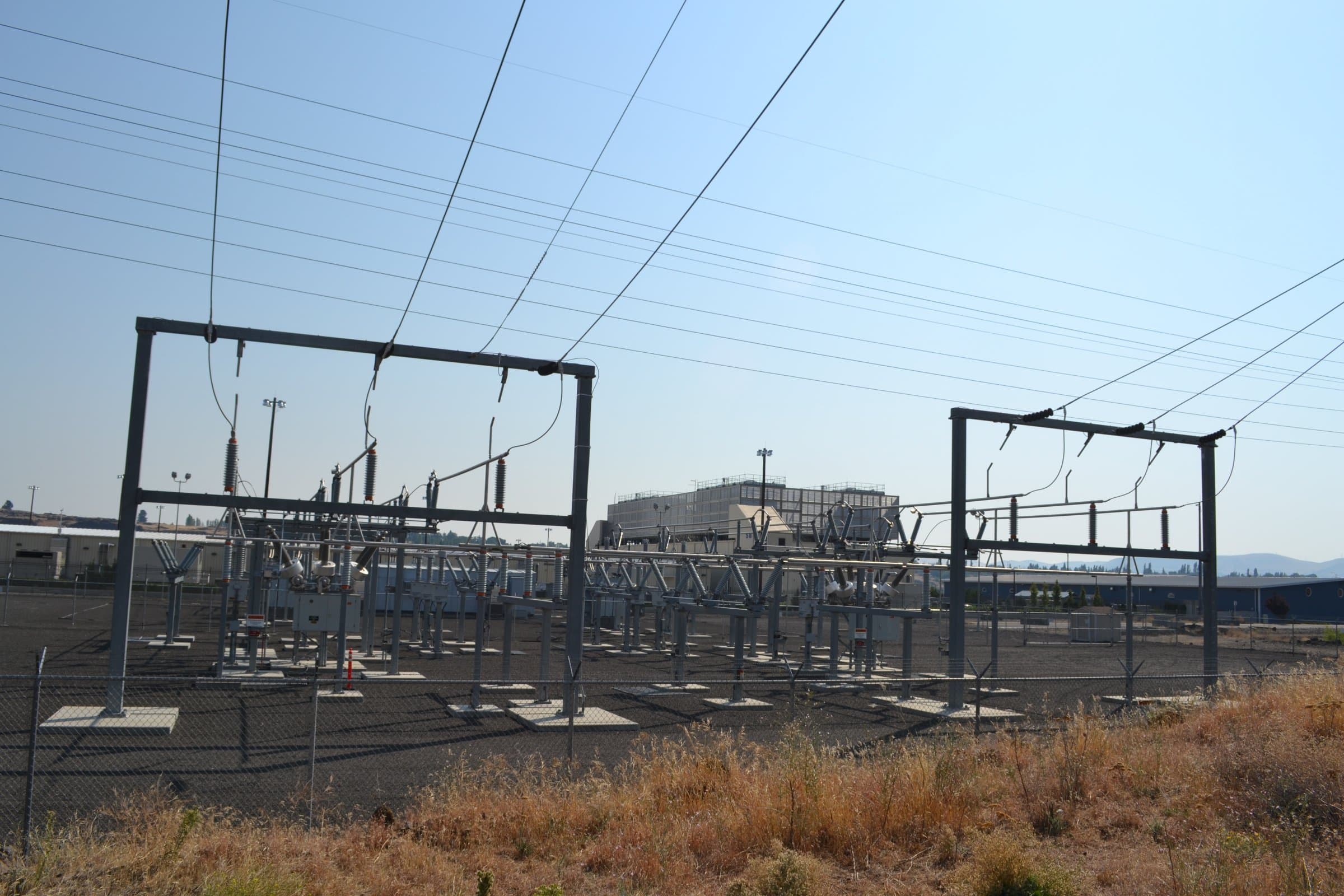
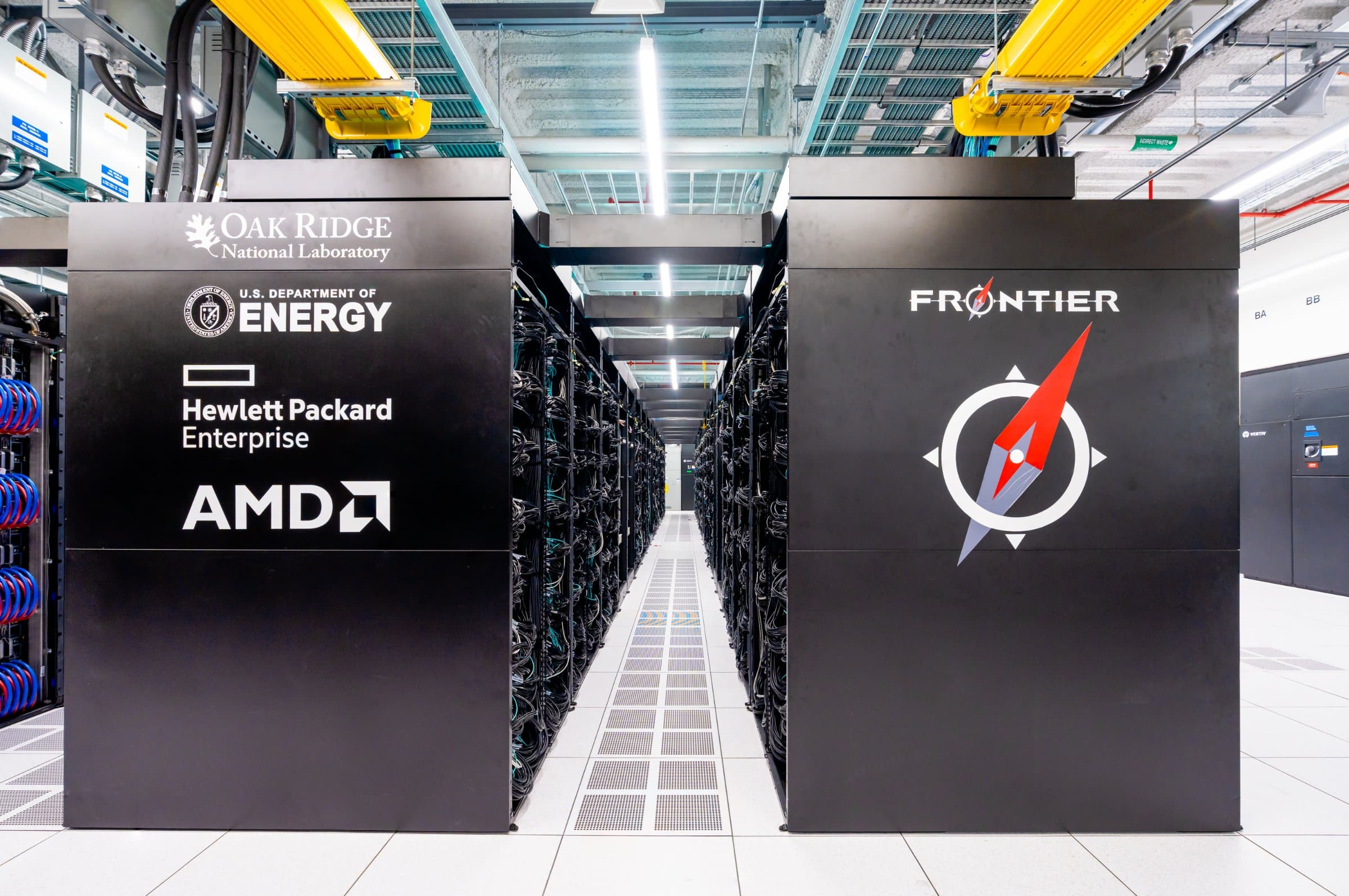
Last week showed where the AI buildout is actually constrained. In Utah, Fervo Energy's Cape Station delivered first power from enhanced geothermal. In Washington, the Department of Energy awarded $1.9 billion to squeeze more capacity out of existing transmission lines. In North Carolina, regulators rejected a $584 million gas turbine because they did not trust the data center forecasts behind it. And in New Mexico, Oracle reportedly sent a force majeure notice on a campus whose gas supply plan fell through.
Chips and capital matter, but the scarce input is firm electricity: power that is available every hour, delivered to a specific site, on a timeline that matches construction. This piece maps how developers are getting it, how long each path takes, and what each path costs in emissions.
The scale of the gap
The International Energy Agency estimates data centers used 485 TWh of electricity worldwide in 2025, up 17% in a single year, and projects roughly 950 TWh by 2030. AI-focused facilities are on track to triple over the same period.
In the US, Lawrence Berkeley National Laboratory put data center use at 176 TWh in 2023, or 4.4% of national electricity, and projected 325 to 580 TWh by 2028. EPRI's February 2026 analysis puts data centers at 9% to 17% of US electricity by 2030. BloombergNEF projects US data center demand reaching 106 GW by 2035, up from about 25 GW in 2024.
The grid is not keeping pace:
- Capacity prices. PJM's 2027/28 capacity auction cleared at a record $333.44 per MW-day and still fell 6,625 MW short of its reliability target. PJM's independent market monitor attributes $6.5 billion of the $16.4 billion auction cost, about 40%, to data center load.
- Interconnection queues. Berkeley Lab's Queued Up 2026 report found the median project built in 2025 took more than five years from interconnection request to operation, and only 13% of capacity that applied between 2000 and 2020 was ever built.
- Speculative requests. ERCOT's large-load queue has swelled to roughly 474 GW, about 90% of it data centers, far more than will ever be built.
- Equipment. GE Vernova reports about 100 GW of gas turbine capacity under contract or reserved, with lead times of about three years.
Path 1: Gas as a bridge
The fastest path to firm power today is natural gas, often built on site or dedicated to a single campus.
- Meta Hyperion, Louisiana: Entergy's plan for Meta's campus in Richland Parish expanded in March to as many as 10 gas plants totaling 7.5 GW, paired with up to 2.5 GW of renewables and storage. The expansion still needs approval from the Louisiana Public Service Commission.
- Stargate Abilene, Texas: the campus has a 360 MW onsite gas plant, permitted to emit more than 1.6 million tons of greenhouse gases a year according to the Texas Tribune, with more turbines proposed.
- xAI Colossus 2, Memphis: Mississippi permitted 41 gas turbines in Southaven for the campus in March. A Clean Air Act lawsuit followed in April.
- DOE federal sites: two of the four sites DOE selected for AI infrastructure, Paducah and Savannah River, lead with gas in their developers' plans.
Gas is fast relative to the grid, but it has costs beyond carbon. Oracle's Project Jupiter shows the fragility: New Mexico rejected the gas pipeline extension, and the campus is now seeking 2 GW of renewables to replace it. Every onsite turbine also adds Scope 1 emissions that no renewable certificate can offset.
Path 2: Nuclear, existing and new
Nuclear is the clean firm option with the most capital behind it, but the timelines split sharply between existing plants and new ones.
Restarts and existing plants (2027 to 2032).
- Constellation expects to restart the 835 MW Crane Clean Energy Center, formerly Three Mile Island Unit 1, for Microsoft in 2027. The NRC authorized fuel receipt in July.
- DOE closed a $1.9 billion loan on September 8 to restart the 615 MW Duane Arnold plant in Iowa.
- Holtec's Palisades plant in Michigan reconnected to its switchyard in September, then paused fuel loading on September 25 after a fuel assembly tilted.
- Amazon's $18 billion agreement with Talen for up to 1,920 MW from Susquehanna ramps to full volume by 2032.
- Meta has signed with Vistra for more than 2.1 GW from existing plants plus uprates.
Advanced reactors (2030 onward).
- Kairos broke ground on its 50 MW Hermes 2 plant for Google in April.
- Amazon and X-energy are planning 320 MW at Cascade in Washington, expandable to 960 MW, for the 2030s.
- Meta's January agreements include 1.2 GW from Oklo in Ohio, with first power targeted by 2030, and TerraPower Natrium units by 2032.
The restarts are the rare case of new clean firm capacity arriving this decade. Everything else lands between 2030 and 2035, after much of the current wave of campuses is energized.
Path 3: Clean firm and long-duration storage
A third category is moving from pilots to contracts.
Geothermal. Fervo's first 33 MW block at Cape Station is online, with the rest of the 100 MW Phase I expected by January 2027 and a 400 MW Phase II targeted for 2028. Google signed a 396 MW PPA with Fervo on September 1, with an option for about 600 MW more.
Multi-day storage. In February, Google, Xcel Energy, and Form Energy announced 300 MW and 30 GWh of 100-hour iron-air batteries in Minnesota, paired with 1.9 GW of wind and solar. Crusoe followed with a 12 GWh agreement with Form Energy in March.
These resources address the hardest part of the problem: clean power at night and through multi-day weather lulls, which is exactly where annual renewable matching falls short.
Path 4: Flexibility as a power source
The cheapest megawatt may be one the data center agrees not to use at peak times. A February 2025 study from Duke University's Nicholas Institute found that existing US grids could absorb 76 GW of new load if that load curtailed 0.25% of the time (about 85 hours a year), and 126 GW at 0.5% curtailment.
Operators are starting to commit to this. In March, Google said it had written 1 GW of data center demand response into utility contracts with Indiana Michigan Power, TVA, Entergy Arkansas, Minnesota Power, and DTE. Texas SB 6 requires new loads of 75 MW or more to install remote shutoff equipment and allows curtailment during grid emergencies. In June, FERC ordered all six grid operators to show cause on their large-load rules, including flexible-load service.
Training workloads can pause, checkpoint, and resume. Inference is less flexible, but it can shift between regions. Flexibility turns a load that the grid has to plan around into a resource that helps balance it.
The options side by side
| Path | Example | Scale | Earliest at scale | Carbon profile |
|---|
| Onsite or dedicated gas | Meta Hyperion, Stargate Abilene | 0.3 to 7.5 GW | 2026 to 2028 | High, Scope 1 |
| Nuclear restart | Crane, Duane Arnold | 0.6 to 0.8 GW | 2027 to 2029 | Near zero |
| Existing nuclear PPA | Talen and Amazon | Up to 1.9 GW | Ramps to 2032 | Near zero, but not new supply |
| Advanced nuclear | Kairos, X-energy, Oklo | 0.05 to 1.2 GW | 2030 to 2035 | Near zero |
| Enhanced geothermal | Fervo Cape Station | 0.1 to 0.5 GW | 2026 to 2028 | Near zero |
| Renewables plus multi-day storage | Xcel and Form Energy | 0.3 GW / 30 GWh | 2027 onward | Low |
| Demand flexibility | Google demand response | 1 GW contracted | Now | Avoids new peakers |
Regulators are changing the terms
The policy trend is consistent: large loads will pay for what they use and prove they are real.
- Ohio: AEP Ohio's tariff requires new data centers above 25 MW to pay for at least 85% of subscribed demand for up to 12 years.
- Texas: the PUC replaced a proposed $50,000-per-MW fee with a flat $100,000 study fee, while ERCOT audits its queue.
- Illinois (FERC): in the ComEd dispute, FERC told grid operators to develop standard cost-recovery agreements for large loads by mid-November, after a developer met its credit requirement with a $1 letter of credit.
- North Carolina: regulators rejected a Duke turbine outright because the demand forecast behind it was not credible.
What this means for builders and AI strategy leads
- Select sites for power first. Land and fiber follow power. The questions that matter are the date of firm delivery, the marginal generator in that grid region, and whether a flexible-load tariff exists.
- Treat flexibility as an asset. A campus that can curtail 1% of hours may connect years sooner. Design training schedulers and contracts for it from day one.
- Give bridge gas an exit. If onsite gas is unavoidable, disclose it as Scope 1, size it for the bridge period, and contract the clean firm replacement at the same time.
- Build a portfolio. No single path covers 2026 to 2035. The strongest plans pair near-term flexibility and storage with a restart or geothermal contract and an option on advanced nuclear.
- For corporate AI buyers, ask where your inference runs. The same workload can carry very different emissions depending on the region and hour. Put region-level, location-based emissions data into your cloud and AI contracts.
Firm clean power is arriving, but most of it arrives after 2030. The decisions made about the bridge period will lock in emissions for a decade. We will track every major power agreement in our buildout tracker as it happens.
Sources
- IEA, Key Questions on Energy and AI
- Lawrence Berkeley National Laboratory, US data center energy report and Queued Up 2026
- EPRI, Powering Intelligence 2026
- Utility Dive, BloombergNEF forecast, PJM capacity auction, market monitor on data center costs
- Power Engineering, GE Vernova turbine orders
- Fortune, Meta Hyperion gas plants; Texas Tribune, Texas data center power plants; Mississippi Free Press, xAI Southaven turbines
- American Nuclear Society, Crane restart, Palisades fuel loading pause, DOE sites; NRC, Crane Clean Energy Center
- DOE, Duane Arnold loan; POWER, Talen and Amazon; Utility Dive, Meta nuclear deals, Cascade SMRs; NucNet, Hermes 2
- Fervo Energy, first power at Cape Station and Google PPA
- Energy-Storage.news, Google, Xcel, and Form Energy, Form Energy and Crusoe
- Utility Dive, Duke flexible load study, Texas SB 6, FERC large-load orders; Google, demand response milestone
- POWER, AEP Ohio data center tariff; Utility Dive, Texas PUC rules, FERC and ComEd, North Carolina turbine denial
- DOE, SPARK grid funding (via DCD); DCD, Oracle force majeure notice
The weekly rundownEvery Monday: the week in AI power, carbon, and capital.
Headlines, tracker changes, and one deep dive, in a five-minute read. Free.
Subscribe free